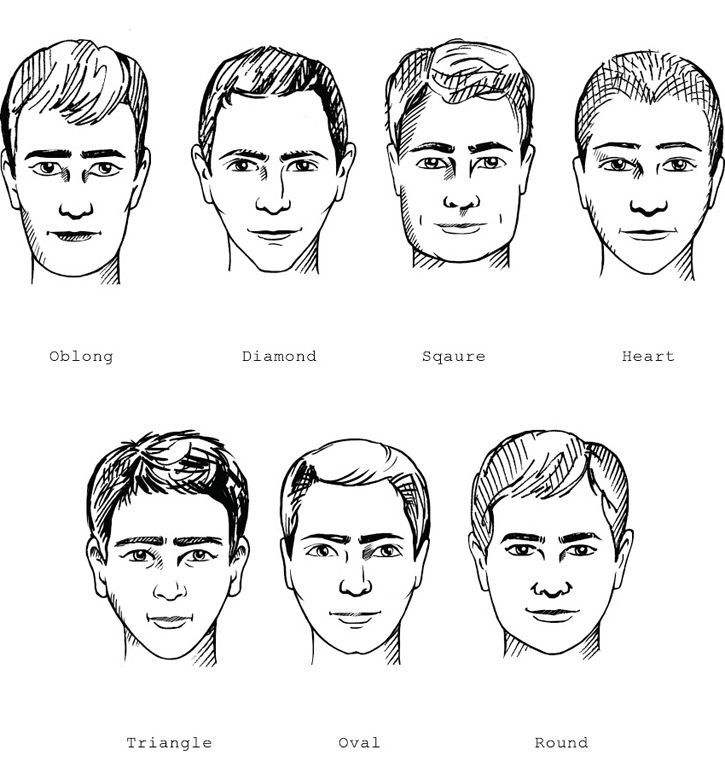
Choose haircut and beard shape by the proportions you want to change, then check whether your hair texture and beard density can support that shape. A face-shape label is a useful starting point, not a rule about which cuts you are allowed to wear. Two men with a similar outline can need different lengths because their hairline, curl pattern and beard growth differ.
Look at your face with your hair pushed back and your head level. Compare the forehead, cheekbones, jaw and total length. Decide whether you want more height, more width, a softer outline or a stronger jaw. That gives your barber a clearer brief than simply asking for the best haircut for an oval or square face.
How to identify your face shape
Use a straight-on photograph taken from a reasonable distance, rather than a close selfie that exaggerates the centre of your face. Notice which part is widest and whether the jaw is rounded or angular. A mirror can help you check whether the impression changes when you move your hair or beard out of the way.
If you measure, use forehead width, cheekbone width, jaw width and face length as comparisons. You do not need a precise ratio or a perfect category. Many faces combine features of more than one shape. The useful result is a description such as “longer than it is wide, with a narrow jaw,” rather than a label you struggle to fit.
A beard changes the visible outline. Assess the face without treating the current beard's longest point as your natural chin. Tell your barber which areas of the beard are full and which need length to cover gaps. A shape that depends on dense cheeks may be unrealistic if your growth is mainly on the chin and moustache.
Long or oblong face
If your face is noticeably longer than it is wide, you may prefer a haircut with some width at the sides and moderate height on top. A softer side part, textured crop or scissor-cut shape can balance the outline. Taking both sides very short while building a tall quiff increases the impression of length.
For the beard, keep the chin from becoming the longest and most prominent part unless that is the effect you want. Some controlled width along the sides can balance the face. Ask how the sideburns will join the haircut: a very narrow join above a long pointed beard can exaggerate the same vertical line.
Diamond-shaped face
Prominent cheekbones with a narrower forehead and jaw often benefit from a little fullness around the forehead and a softer edge near the temples. A fringe, a textured top or a scissor cut can provide that. Very tight sides may draw more attention to the cheekbones, which is useful only if you want to emphasise them.
A beard can add some presence around the jaw without turning the chin into a sharp point. Keep the change gradual from cheek to jaw. Your actual cheek growth matters more than a diagram: if it is sparse, a shorter beard with a neat natural outline can be a more convincing choice than trying to build width with long thin strands.
Square face
A square face has a comparatively strong jaw and a fairly similar width through forehead, cheekbones and jaw. You can emphasise that structure with a clean side part or a compact crop, or soften it with movement and a less rigid outline. Neither approach is inherently better.
Short stubble can leave the jaw visible. A fuller beard can also work, but discuss whether its corners should be square or softened. A sharply boxed beard under an already angular face adds more definition; rounding the corners gives a gentler result. Check the outline from the side as well as straight on.
Heart-shaped face
With more width at the forehead and a narrower chin, keep an eye on how much extra volume the haircut adds at the front. A relaxed fringe or a lower, softer top can be easier to balance than a large swept-up style. Leave enough side length to connect the top with the face rather than treating the forehead as a separate block.
If your growth permits, a beard with some fullness near the jaw can balance the narrower lower face. That does not mean making the chin as long as possible. Agree where width should sit and how much of the cheek line should be kept natural.
Triangular face
A wider jaw and a narrower forehead can suit more movement or volume around the upper part of the haircut. A textured quiff, side sweep or medium-length scissor cut can bring attention upward. Keep the sides proportionate; very tight sides below a narrow top can make the jaw appear wider.
Beard length along the jaw can reinforce the widest part of the face. If you want less emphasis there, try a shorter beard or stubble before adding bulk. Moustache and chin growth can help shape the lower outline, but the result depends on density rather than the name of the style.
Oval face
An oval outline offers room to experiment, but it does not make every haircut equally practical. Start with your hairline, growth direction and daily routine. A side part, textured top, crop or longer shape can all be reasonable choices when their proportions work with the available hair.
Use beard shape to decide how much of the natural jaw you want to show. A long beard adds length; a wide beard adds width. If the haircut already has a lot of height, check the combined silhouette before choosing a pointed beard. The haircut and beard should be judged together.
Round face
If the outline is rounded and length and width are relatively similar, some controlled height and a less bulky side shape can create more definition. That might be a short quiff, a textured crop with a deliberate outline or a side part. A very tall top is not necessary, and a skin fade is not the only way to reduce width.
A beard can define the lower outline if it has enough density to hold a clear shape. Keep excess width at the cheeks under control and choose chin length deliberately. A long thin beard does not automatically create a stronger jaw; a shorter, more even shape may look cleaner.
Hair texture, hairline and beard density change the choice
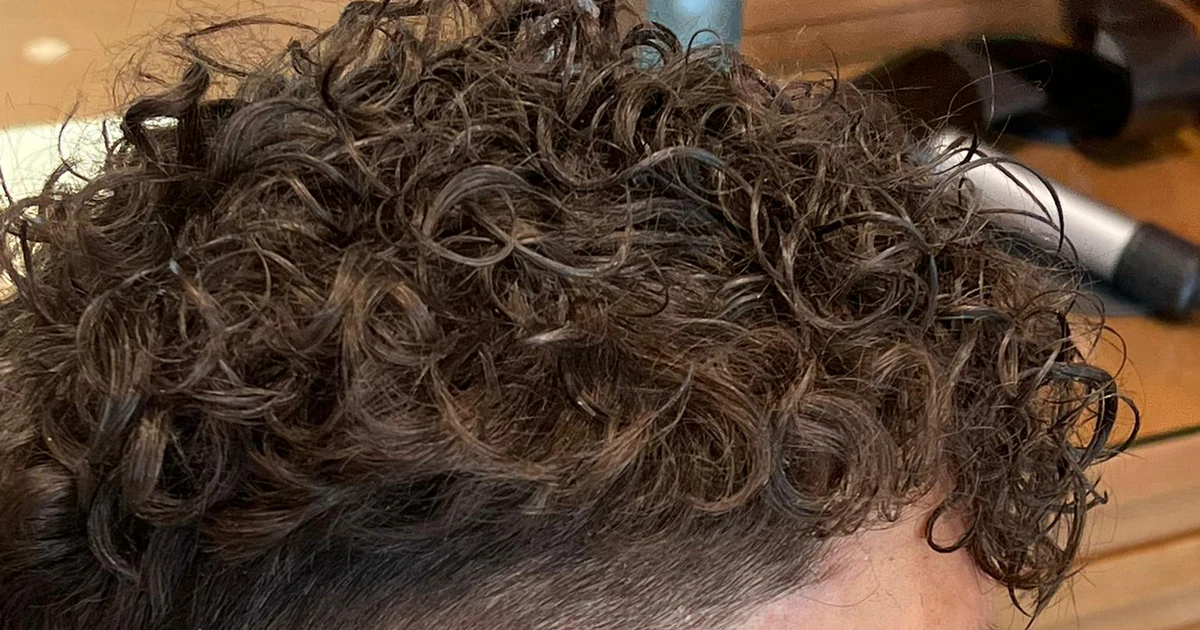
Fine hair can separate when too much length is kept on top. Thick hair may need weight removed in specific places, while curls need room to spring into their natural shape. A strong crown whorl or a receding hairline can alter where the haircut should be short and where length should stay. Our hair-type guide helps you narrow these choices.
Keep styling effort in the decision. If a reference photo needs daily blow-drying and you normally let your hair dry naturally, ask for a shape that works with that routine. Product can finish a haircut; it cannot supply missing density or permanently change growth direction.
How to brief your barber
Bring one or two pictures with similar hair and beard density. Explain what you like: the width at the temples, the softer jaw, the visible cheek line or the height on top. Mention what you want to avoid and how often you expect to return. Ask to compare the front and side outline before committing to extra beard length.
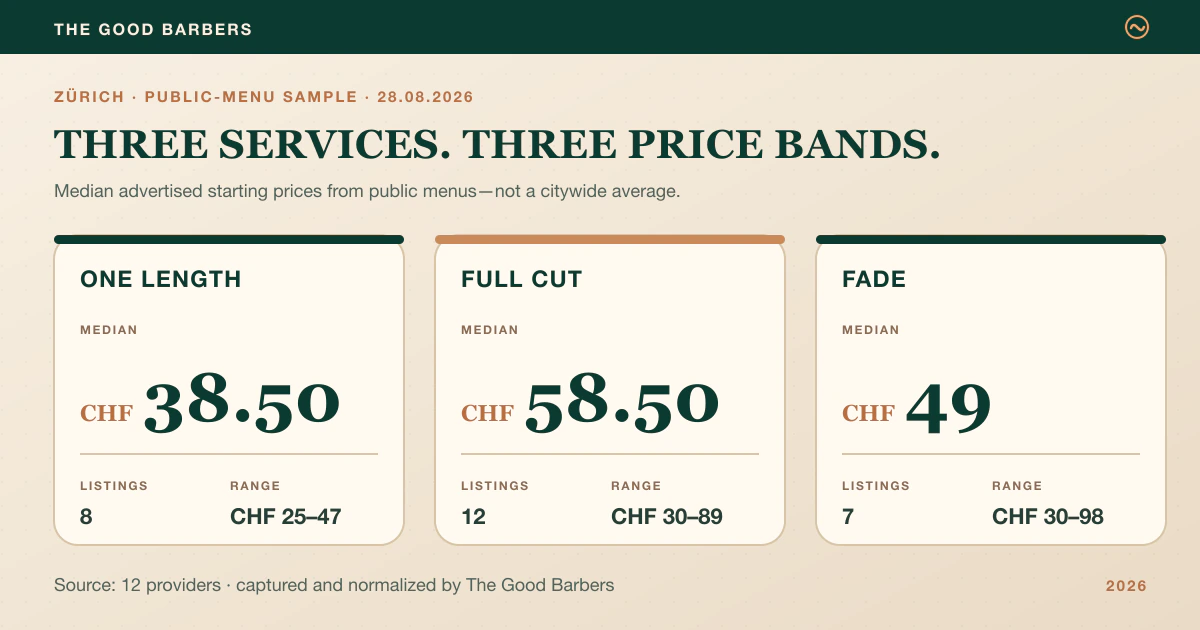
For specific finished looks, see our haircut and beard combinations. This guide explains proportions; that page helps you compare the pairing. Check the current service menu when you are ready to book the time needed for both hair and beard.
Community
Join the conversation
Share your thoughts or ask a question. Our barbers are listening.