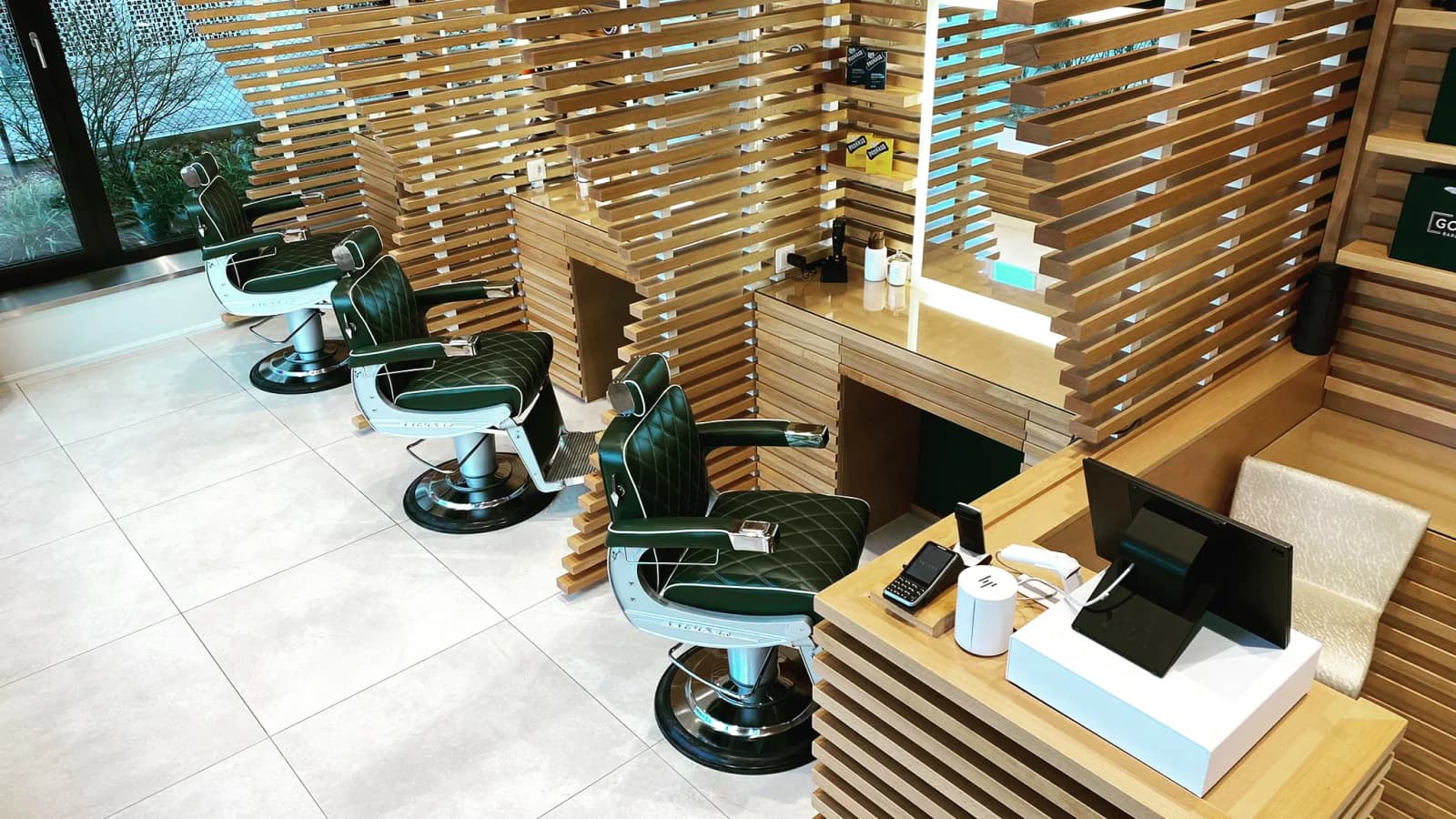
Two recent developments have brought chair rental back into focus for the Swiss hairdressing trade.
In October 2024, Blick reported on a beauty coworking model in which the operator collected customer payments, provided products and an online booking system, deducted workplace and social-insurance charges and paid out the remainder. Damien Ojetti, central president of Coiffure Suisse, described the model as a legal grey area. Blick reported that, under the law then in force, Coiffure Suisse did not support models like the one Blick had profiled.
On 2 March 2026, Coiffure EU and UNI Europa issued a joint warning about chair rental used to hide employment. The statement said salon control of prices, schedules or products could be a warning sign and argued that employment-based salons should remain the dominant model. Coiffure Suisse is a member of Coiffure EU. Its central president, Damien Ojetti, is listed as Coiffure EU's treasurer and a member of its board.
Then, on 26 May 2026, Coiffure Suisse announced a membership change that Ojetti described to the Schweizerische Gewerbezeitung on 12 June as “a small revolution”: chair renters and coworking hair professionals could become members. The association said it was no longer closing itself off to these working models, provided the independence was genuine and formally recognised by the competent AHV compensation fund.
The positions draw the same essential line. Genuine self-employment is legitimate. Employment under another name is not. Coiffure Suisse's May decision opened association membership to chair renters whose independence has been recognised by the competent AHV compensation fund. It did not approve arrangements in which a salon continues to act as the employer in practice.
That makes the practical question more urgent: where is the line between an independent business and a person who carries the risk while the salon still controls the work?
What The Good Barbers found
On 24 September 2026, The Good Barbers completed a national review of 93 distinct chair-rental models. The analysis combines 89 public offers with five operating examples known to us firsthand, with one overlap counted once. Every outside business remains anonymous.
We searched in German, French, Italian and English across salon websites, social media, association listings, classified sites, specialist platforms and property portals including Homegate, ImmoScout24 and Flatfox.
We included an offer if it was published between 24 September 2024 and 24 September 2026, or if an undated offer was publicly available when we captured it on 24 September 2026. An advert still matters after it expires or the place is filled: it records that a salon sought a chair renter during the study period.
We coded only indicators named in PK Coiffure's FAQ or Annex III of the current GAV.
THE MAIN FINDING
44% of the models described or displayed at least one officially named indicator.
An indicator is a reason to examine the arrangement, not a legal finding.
The warning signs we found
These are not findings of false self-employment. They are features the industry's own documents say are relevant when the operating relationship is assessed. A public advert cannot show whether a feature later became a contractual obligation, and firsthand observation does not replace an authority's status decision. One fact does not decide status. The operating model as a whole does.
One model involved telephone appointment handling, holiday cover and assistance work, with a choice between fixed rent and revenue participation. Others placed the renter inside the salon's team or brand, restricted access periods or included salon products and tools.
The 89 public offers also frequently did not provide enough information to assess independence. Only six expressly said that the renter sets their own prices. Eighty-three did not say who sets them. Eighty did not state who manages bookings, 78 did not state who receives the customer's payment and 86 did not show AHV recognition for the advertised activity. Missing information was recorded as not stated, never as salon control.
Why this is personal for us
We did not start with a theory. We started with what we have seen in our own trade.
“We have seen experienced barbers leave employment for chair rental once they have built strong relationships with customers. That made us want to understand whether chair rental always means genuine independence, or whether some people remain employees in everything but name.”
The point is that the questions are real. They affect barbers who carry the risk, salons that employ people properly, and customers who may reasonably assume everyone working under one name belongs to one business.
“At The Good Barbers, our barbers are employees. We carry the cost of wages, holidays, insurance, training and quiet hours. Genuine independent professionals should control their own businesses. A rental contract should not be a way to transfer an employer's risk to the person holding the scissors.”
What the official rules say
The current federal AHV wage guidance is direct. In its section on hairdressing, it says that so-called subtenants of hairdressing chairs are treated as employees for AHV wage purposes.
The practical arrangement still matters. The AHV compensation fund decides status in the individual case, and general AHV guidance looks at factors such as public business identity, economic risk, freedom to organise the work and activity for multiple clients or principals.
PK Coiffure's own FAQ brings the issue down to salon level. It identifies obligations concerning opening hours, helping with salon customers, reporting revenue and using a common appointment book as grounds for suspicion of false self-employment. The GAV also lists integration into an existing salon, restrictions on working time, salon instructions, use of salon infrastructure and a post-rental non-compete among typical employment features.
Coiffure Suisse and PK Coiffure are separate bodies with closely connected roles. Coiffure Suisse is the employers' association and one of the parties to the GAV, together with Unia and Syna. PK Coiffure is the joint commission created by those parties to administer and enforce the GAV. Coiffure Suisse therefore helps constitute the commission, but the commission is not simply another name for Coiffure Suisse.
This is why a contract headed “chair rental” cannot answer the question by itself. The operating reality does.
What the 2025 inspection figures tell the sector
The one-page 2025 report mailed by PK Coiffure shows how much work remains for the whole trade.
The two deviation categories overlap, so they cannot be added together. Even so, the figures suggest that prevention and follow-up matter just as much as the number of inspections.
More detail would help everyone learn from the results: what commonly goes wrong, whether the issue is administrative or material, what was corrected and whether the same problem appeared again.
From 1 January 2026, the annual employer contribution doubled from CHF 100 to CHF 200. PK Coiffure said the increase was needed to finance the work required by a new target of substantially more than 400 controls a year. SECO's actual figures add important context: 436 hairdressing-employer controls were recorded in 2024, before the increase, followed by 314 in 2025.
Source: SECO statistical annexes. The 2026 target is not a completed result.
The sector had therefore already passed 400 controls once under the previous contribution. That does not tell us whether the 2024 controls had the same depth or cost, or whether that level could be maintained every year. It leaves a useful question for the complete 2026 report: will the higher contribution deliver more consistent coverage, deeper checks, stronger follow-up or another improvement beyond the level reached in 2024?
PK Coiffure already receives annual employer declarations. Public booking pages could complement that work. If more professionals can be booked under a salon's name than its declaration appears to explain, PK Coiffure could ask how each person works within the business. A shared calendar, prices, payments, customers or products would help show where that simple clarification may be useful. Zefix can confirm the legal business behind the salon name.
This would only be a starting point for a human review. A booking profile may be old, and a professional may be genuinely independent. The aim is to help focus limited time where clarification would be most useful.
“At The Good Barbers, we want fair conditions for salons, employees and genuinely independent professionals.”
What clearer reporting could add
More controls are useful. More detail about their results could help the whole trade improve.
Future annual reports could show the most common findings, their seriousness, first and repeat cases, later corrections and whether the same problems return. Separating targeted controls from a stable random sample would also help the sector understand whether compliance is improving overall.
Chair rental itself is not the problem. The shared goal is fair working conditions for professionals and fair competition between businesses that follow the same rules.
If a barber is genuinely independent, that independence should be visible in the way prices, hours, bookings, payments, customers and business identity are controlled. If a salon controls those things, the person should not carry an employer's risk without an employee's protection.
Sources and method
The analysis covers 93 distinct models: 89 offers made public during the 24 months to 24 September 2026 and five anonymised operating examples known to The Good Barbers firsthand, with one overlap counted once. It counts only indicators named in PK Coiffure's FAQ or Annex III of the GAV. Every model remains recorded in the research file.
- Downloadable study summary (CSV)
- European social partners' joint statement, 2 March 2026
- Blick on salon coworking and Coiffure Suisse's position, 11 October 2024
- Coiffure Suisse announcement, 26 May 2026
- Coiffure EU membership page for Coiffure Suisse
- Schweizerische Gewerbezeitung interview, 12 June 2026
- PK Coiffure FAQ, status 13 January 2026
- PK Coiffure on the 2026 control target and employer contribution
- GAV Coiffure 2024 to 2027
- Federal AHV wage guidance, status 1 May 2026
- SECO 2025 statistical annex
Gilberto de la Fuente
The Good Barbers, Zürich
Community
Join the conversation
Share your thoughts or ask a question. Our barbers are listening.