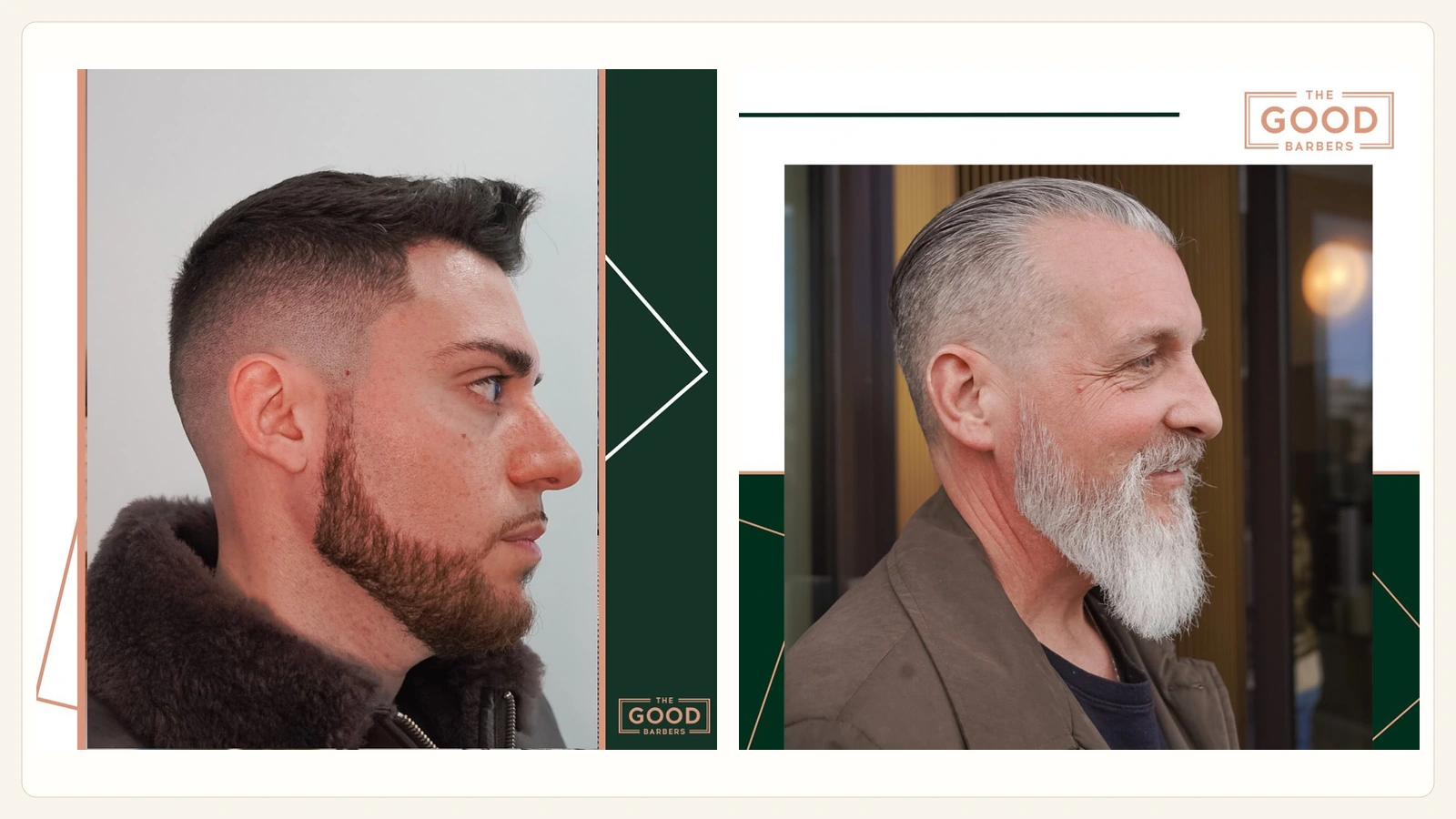
Stubble, short boxed and full beard describe different amounts of coverage and length. Goatee, circle beard, Van Dyke and Balbo describe shapes around the chin and mouth. A beardstache puts a fuller moustache above a shorter beard. Start with those differences when identifying a style in a photo.
The name helps, but the details settle the cut: which areas stay covered, whether the moustache connects, and how much length remains at the chin. “Goatee” in particular can mean different things to different people. Point out the shape you mean before anything is shortened.
Eight beard styles at a glance
| Style name | How to recognise it | Detail to discuss |
|---|---|---|
| Stubble | Very short facial hair; skin remains visible | Soft or sharply defined cheek and neck edges |
| Short boxed beard | A compact full-beard shape with controlled sides | Cheek coverage and the shape under the chin |
| Full beard | Hair across cheeks, jaw and chin, with a moustache | Side width and how much chin length to keep |
| Goatee | In the narrow sense, a chin beard without a moustache | Chin only or a connected style around the mouth? |
| Circle beard | Moustache and chin beard join around the mouth | Keep the connections at the mouth corners |
| Van Dyke | Separate moustache and chin beard, often pointed | Visible gaps and the shape of the chin beard |
| Balbo | Detached moustache and broader lower beard; no sideburns | How far the lower beard extends beside the chin |
| Beardstache | A fuller moustache with shorter beard or stubble | Keep the moustache more prominent than the cheeks |
Short coverage or a fuller outline?
Stubble
Stubble reads as short hair against visible skin rather than a solid beard silhouette. “Three-day beard” is another familiar name, but it does not specify how quickly your hair grows. Light and heavier stubble are variations of the same idea.
Ask to keep the amount of visible skin you like. Say whether you want the edges left soft or tidied clearly, and check a small area before the whole beard is taken shorter.
Short boxed beard
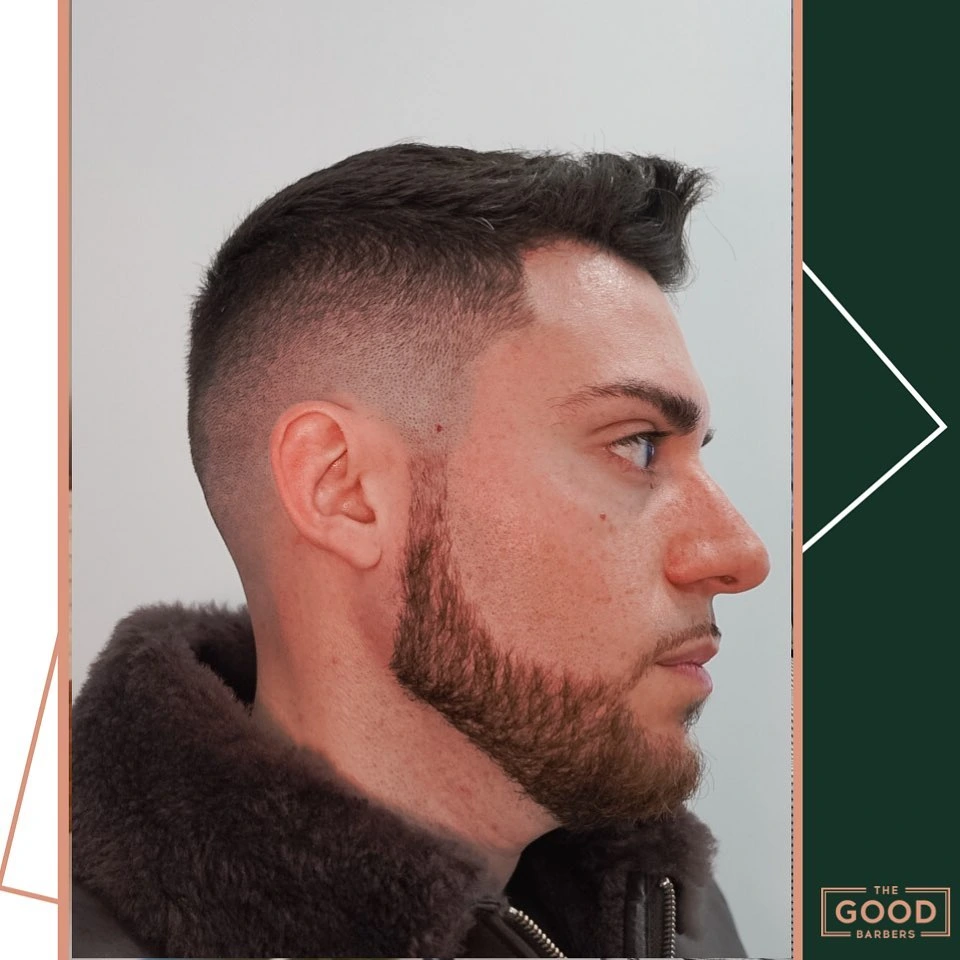
A short boxed beard keeps cheek, jaw and chin coverage in a compact shape. The sides are trimmed close, and the cheek and neck boundaries give it an outline. “Boxed” does not mean that every corner must be square.
Ask for controlled width at the sides and agree how high the cheek line should sit. A lower line removes more cheek hair; a higher one keeps more coverage. Show the shape you want under the chin as well as from the front.
Full beard
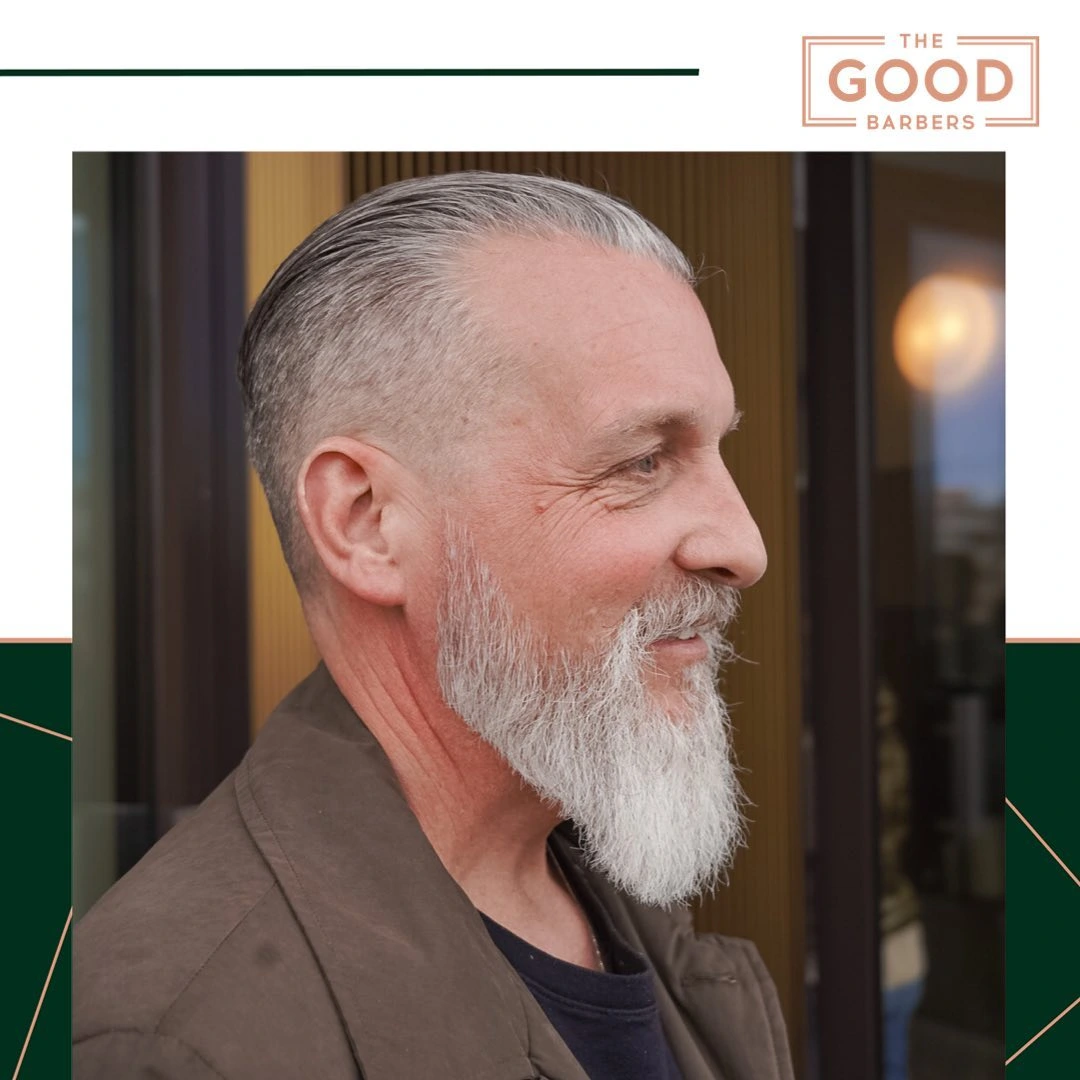
A full beard combines the moustache, cheeks, jaw and chin into a fuller overall shape. It can be relatively short or carry considerable length. Full describes the coverage; it does not tell the barber whether the bottom should be round, square or pointed.
If you want to keep length, say where. Reducing side bulk and shortening the chin are different changes. Ask your barber to show the proposed outline before taking off the part you have been growing.
Goatee, circle beard, Van Dyke or Balbo?
Goatee
Used narrowly, goatee means hair on the chin with the cheeks and moustache area shaved. In everyday speech it is also used for several beard shapes around the mouth. If you ask for a goatee, make the moustache decision explicit: keep it, remove it, connect it or leave a gap.
Circle beard
The moustache connects to the chin beard on both sides of the mouth, making a continuous outline. The cheeks remain clear. It is often called a connected goatee. The defining feature is the join, rather than a perfectly circular geometric shape.
Van Dyke
A Van Dyke separates the moustache from the chin beard. The cheeks stay shaved, and the chin is often shaped to a point. Describe how wide you want the chin section and whether you want that point, rather than relying on the name alone.
Balbo
A Balbo also has a detached moustache, but the lower beard commonly extends more broadly beside the chin. The sideburns are removed, so it does not join into a full beard at the ears. Confirm the lower outline in a reference photo; variations can look close to a Van Dyke.
The quick distinction: a circle beard connects around the mouth. A Van Dyke separates the moustache and focuses on the chin. A Balbo keeps that separation with a broader lower shape. Check the gaps and coverage in the picture, especially when two sources use different names.
Beardstache, moustache and soul patch
A beardstache combines a prominent moustache with a shorter beard, often stubble. The contrast matters more than a fixed length: trimming the moustache to the same short setting as the cheeks removes much of the effect. Ask to preserve its fullness while reducing the surrounding beard.
A standalone moustache leaves the chin and cheeks shaved. A soul patch is a small area of hair directly below the lower lip; it can stand alone or form part of another style. For moustache shapes, see our moustache guide.
How to ask your barber for the right shape
Bring a front view and a side view if you have them. Say what you like in the reference: the clean cheeks, the separate moustache, the chin length or the softer outline. Then point out what should stay on your own beard.
- Coverage: should the cheeks and sideburns remain, or be shaved?
- Connection: should the moustache join the chin beard?
- Outline: round, square, pointed or close to your natural growth?
- Upkeep: which areas are you willing to tidy between appointments?
Bring the beard name and a photo. Then tell your barber what you want to keep: the cheeks, the chin length, and whether the moustache should connect to the beard.
For example: “I want a short boxed beard. Keep the cheek coverage, reduce the width at the sides and leave the chin length. Show me where you would put the neckline.” That gives the name a useful, specific brief.
Two questions before choosing a beard style
What if my cheeks grow less densely than my chin?
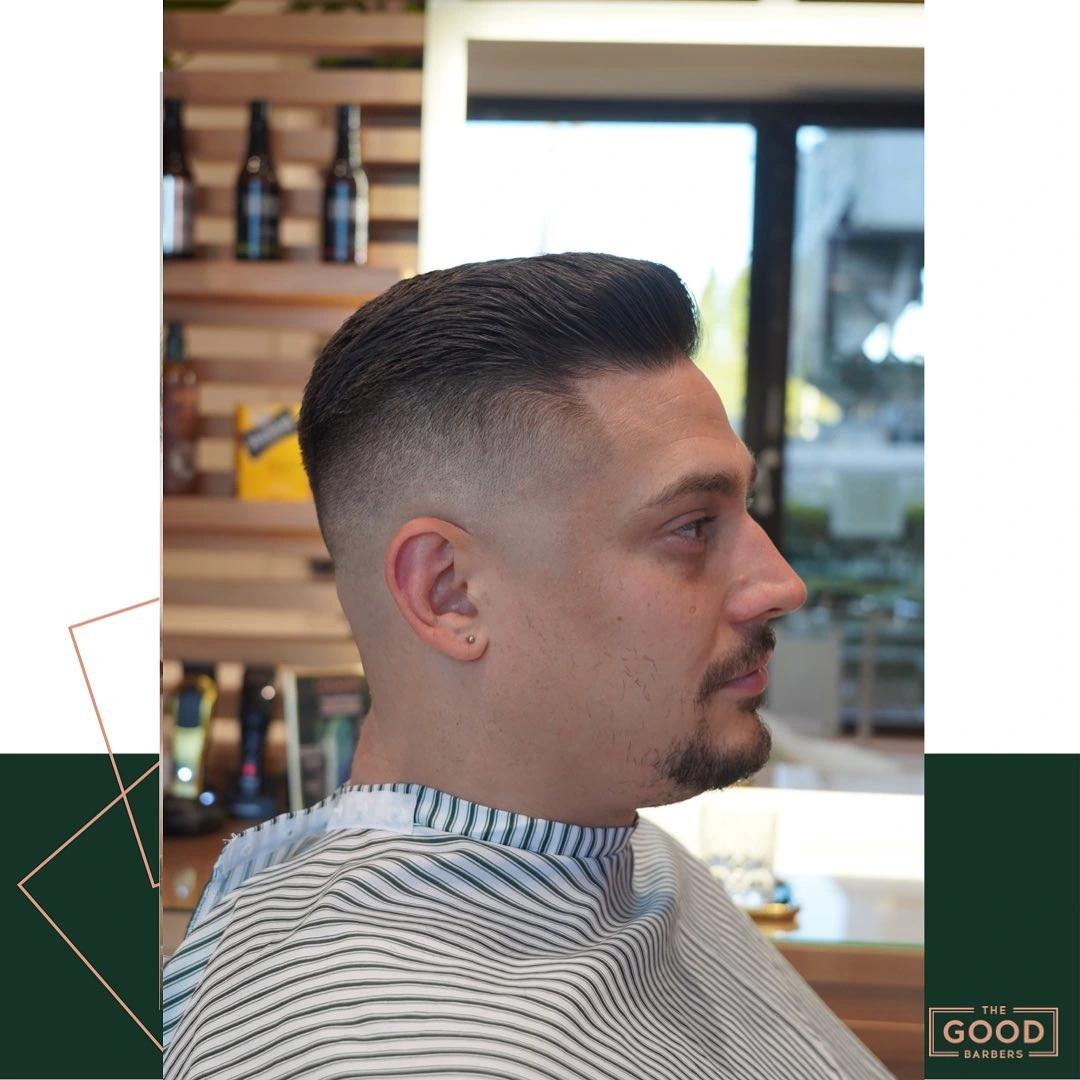
Choose the coverage with your actual growth in mind. A chin-focused style may use the areas you already have, but check whether the connections needed for a circle beard are there. Discuss the outline with your beard at its current length.
Is a beard fade a separate beard style?
A beard fade describes a gradual change in length, often around the sideburns. It can be added to different beard shapes. Ask for the shape first, then agree where the transition should start and end.
Once you know the name
Use our haircut and beard combinations to plan the two together, or the face-shape guide to explore proportions. For washing and finishing, our beard oil, balm and wash guide explains their different jobs. Bring your reference to your next beard trim and agree the outline before the first pass.
Style descriptions checked against primary grooming guides: Gillette on short beards, circle beards, Van Dyke and Balbo; Philips on full-beard coverage; Beardbrand on the beardstache.
Community
Join the conversation
Share your thoughts or ask a question. Our barbers are listening.