Ask for "a fade" and you have told your barber almost nothing. Low, mid, high, skin, taper, burst: they are all fades, and what separates them is a few centimetres of head. Get that wrong and you spend the next three weeks with a haircut that is sharper, or softer, than the one you had in mind.
So here is the whole system, the way we explain it in the chair at Enge and Europaallee. What each fade actually is, who it suits, the words to say so you get it, and what it costs to keep looking the way it did when you walked out.
The fade family in one table
| Fade | Where the blend starts | Stays sharp for |
|---|
| Taper | Around the ear and neckline only | 4 to 6 weeks |
| Low fade | Just above the ear, below the temple | 3 to 4 weeks |
| Mid fade | Around the temple | 3 weeks |
| High fade | Above the temple | 2 to 3 weeks |
| Skin fade | Any of the above, taken to bare skin | 1 to 2 weeks |
Taper or fade? Start here
This is the fork in the road, and most men pick the wrong branch because the two words get used as if they mean the same thing.
A taper shortens the hair only at the edges: around the ear, down the sideburn, along the neckline. The bulk of the side keeps its weight. There is no hard line anywhere, so a taper looks deliberate on day one and still looks normal in week six. It is the cut that survives a busy month.
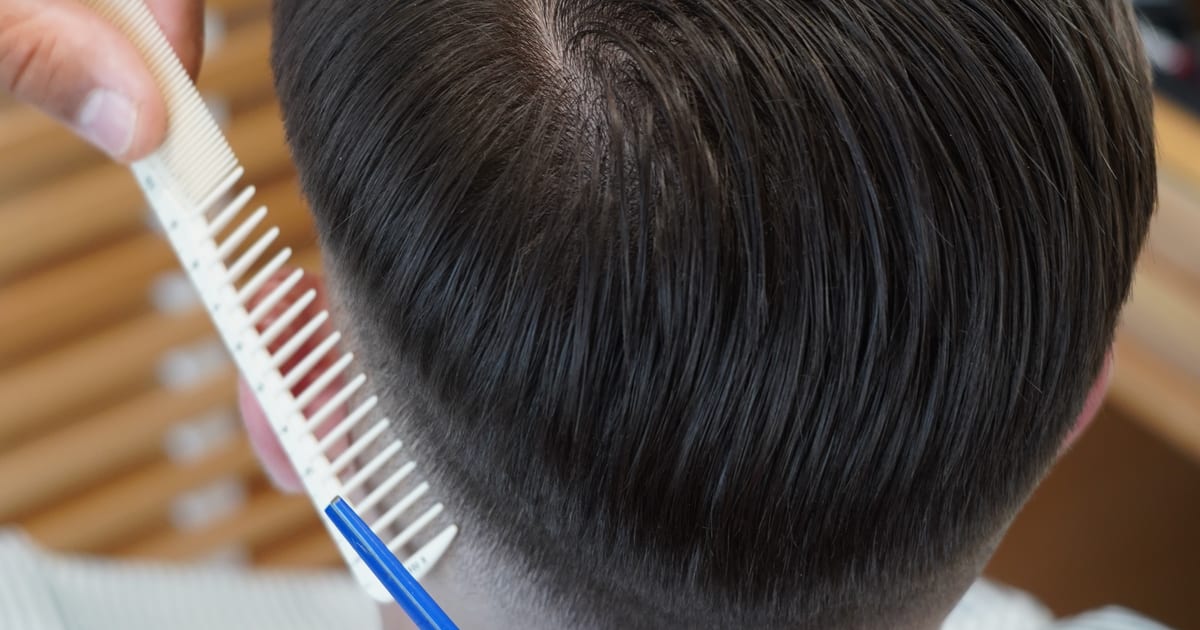
A fade blends the whole side, from very short at the bottom to your full length at the top. That gradient is the point, and it is also the problem: a gradient is only clean while every step in it is the right length. Once your hair grows, the steps close up and the fade turns into a blur.
If you want to look sharp in photographs, ask for a fade. If you want to look tidy for a month without booking anything, ask for a taper. Both are good haircuts. They are just answers to different questions.
The low fade
The blend starts just above the ear and never climbs past the temple. You keep visible weight through the sides, so the shape of your head does most of the work and the haircut does the rest quietly.
This is the one we cut most often for men who need a haircut that reads well in a meeting on Monday and at dinner on Friday. It suits almost every face, and it is forgiving if your hairline is starting to move: nothing is exposed high on the head.
Ask for: a low fade starting just above the ear, blended up into the length on top.
The mid fade
The blend starts around the temple, roughly level with the top of the ear and the corner of your eyebrow. It is the middle setting in every sense, and it is where most of our clients end up once they have tried the other two.
A mid fade gives you real contrast between the sides and the top without the haircut announcing itself from across the room. It works especially well when there is enough length on top to style: a mid fade with 4 or 5 cm on top is the most requested combination in both our shops.
Ask for: a mid fade starting at the temple, clean blend into the top.
The high fade
The blend starts above the temple, so the short section wraps well up the side of the head. The contrast is loud and the shape is graphic. It suits strong hair, strong features, and men who like their haircut to be a decision rather than a default.
Two honest warnings. A high fade exposes the sides of your head, so if your skull has a flat spot or a scar you did not know about, you will meet it. And because the blend sits high, growth shows fast: this is the fade that goes from sharp to shaggy in about two weeks.
Ask for: a high fade starting above the temple, hard contrast with the length on top.
The skin fade is not a fourth height
This trips up more clients than anything else on the list. A skin fade does not describe where the blend starts. It describes how far down the bottom of it goes: all the way to bare skin, with no guard between the blade and your head.
Which means you can have a low skin fade, a mid skin fade, or a high skin fade. Height and finish are two separate choices, and your barber needs both. Saying "skin fade" alone leaves the more important half of the question unanswered.
Skin is the sharpest finish there is, and the shortest lived. Bare skin grows back into visible stubble within a few days, and the clean line at the bottom of the blend is the first thing to go. If you love the look, budget for it: this is a two week haircut, not a monthly one. We go into the detail on our skin fade page.
Burst and drop fades, briefly
Two names you will see on Instagram and should know before you ask for them.
A burst fade curves around the ear in a semicircle and leaves the back of the head longer. It is the standard partner for a mohawk or a mullet, and it is the one to ask for if you want the sides short but the back untouched.
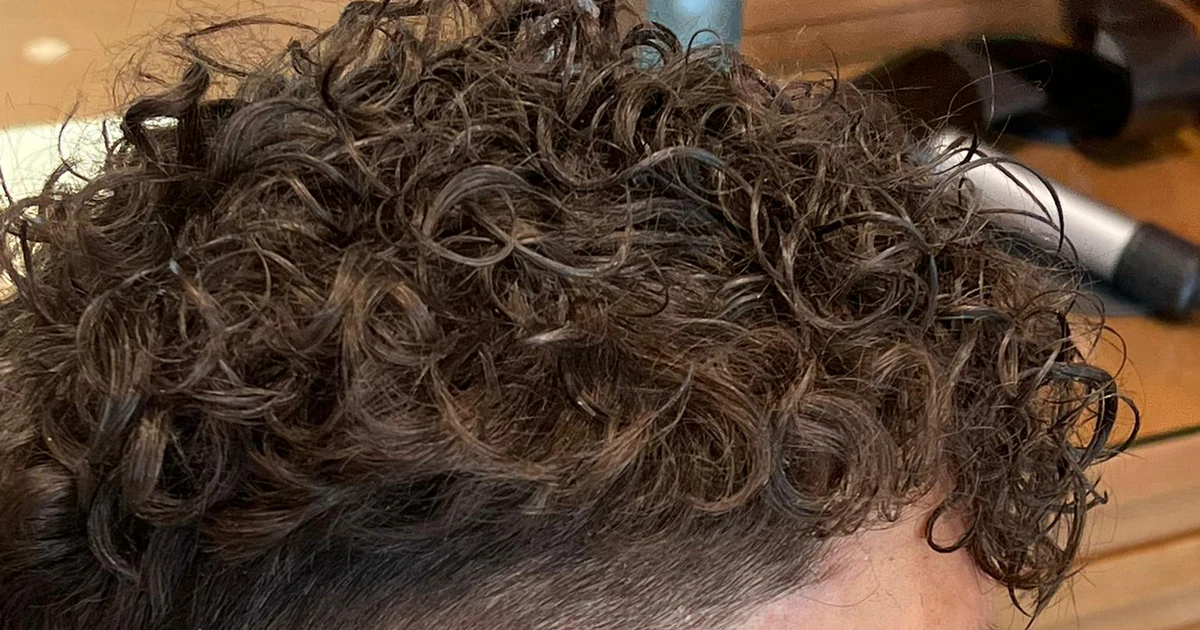
A drop fade follows the low line at the front and then drops down behind the ear, curving toward the neckline instead of running straight across. It flatters a round head shape and it looks particularly good with curls on top.
How often does a fade need a re-cut?
Hair grows around 1.25 cm a month, so roughly 3 mm a week. On top of your head, 3 mm is invisible. Inside a blend that travels from bare skin to 12 mm across a few centimetres of scalp, 3 mm is a quarter of the whole gradient. That is the entire reason fades fall apart while the top still looks completely fine.
The higher the fade and the shorter the finish, the more of the gradient that 3 mm eats. Which is why a taper gets six good weeks and a high skin fade gets two.
Two things worth saying about whatever number came out of that. First, it is a plan, not a verdict: if you want a skin fade and a six week gap, take a low skin fade and accept that weeks five and six are the soft ones. Second, the yearly figure surprises people less once they see it as a weekly number. A fade that looks right every day of the year is not an expensive habit, it is just a regular one.
If you want the general rules for every kind of haircut rather than fades specifically, we wrote those up in how often should you get a haircut. Full service pricing lives on the haircut prices page.
How to ask for the fade you actually want
Five sentences and your barber has everything. Most clients give us one.
- Name the height against a landmark. "Starting at the temple" beats "medium", because your medium and ours might be two centimetres apart.
- Name the finish. Down to skin, or down to a number one, or down to a number two. Roughly, a one is 3 mm, a two is 6 mm, a three is 10 mm.
- Say what happens on top. The fade is only the sides. Tell us the length you want left, in centimetres or in fingers, and how you dry it in the morning.
- Bring a photo of the back. Everyone brings the front. The front is the part we can already see. The back and the neckline are where the disagreements happen.
- Tell us when you are coming back. If you cannot return for six weeks, we cut it differently. Say so and we build the grow out into the shape.
If you are not sure which height suits your hair to begin with, start with what haircut suits your hair type or the face shape guide, then come back to this one.
Keeping it sharp between visits
You cannot fix a blend at home, and you should not try. Clipping into a gradient without seeing the back of your own head is how a three week haircut becomes a one week haircut. What you can do is control how the top sits, because a well styled top makes a softening fade look intentional.
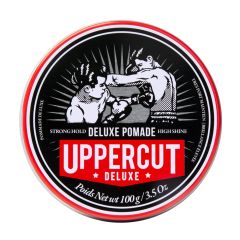
Matte finishes do that better than shiny ones. Shine draws the eye to the surface and to the line where the fade starts; a matte, dry finish keeps the attention on the shape. A clay or a matte pomade through towel dry hair is all it takes.
Two more habits that buy you days. Wash less often than you think you need to, because stripping the hair makes fine hair sit flat and expose the scalp through the blend. And keep the neckline in mind: it is the first thing to look untidy and the easiest thing to notice from behind. If your fade is still holding but the neck has gone, book a quick tidy rather than a full cut.
If you want the full breakdown of clays, pastes and pomades, we compared them all in the styling product guide, or browse the range in the online shop.
FAQ
What is the difference between a taper and a fade?
A taper shortens the hair only around the ear and neckline and keeps the weight through the sides. A fade blends the entire side from very short at the bottom up to your full length. A taper grows out quietly over six weeks; a fade needs a re-cut in two to four.
Which fade lasts the longest?
A low fade finished with a guard rather than to skin. The blend sits low where growth is least visible, and starting at 3 mm instead of bare skin means there is more gradient to lose before it stops reading clean. Expect three to four good weeks.
Is a skin fade bad for your hair or scalp?
No. The clipper takes hair down to the skin but does not damage the follicle, and hair grows back at the same rate and thickness. Some men get slight irritation on the first day or two, which a light unscented moisturiser handles. If you burn easily, remember the newly exposed skin has no cover.
What is the most popular fade?
The mid fade, by a distance, in both our Zürich shops. It gives clear contrast without looking severe, it suits most face shapes, and it holds its shape for around three weeks, which fits how often most men can realistically book.
How much does a fade cost in Zürich?
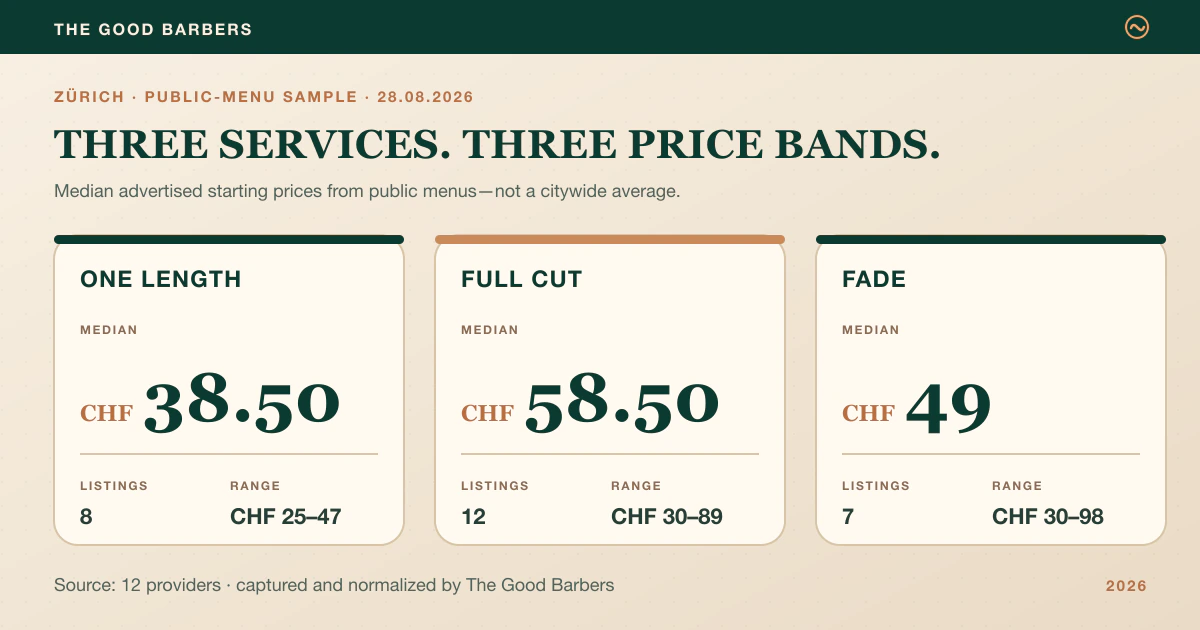
At The Good Barbers, The Good Fade Haircut is CHF 69 for 45 minutes, including shampoo and finish styling. Across the city, men's cuts generally run from about CHF 30 to CHF 100 depending on the shop and the service.
Can I get a fade with curly or thinning hair?
Yes to both, with adjustments. Curls fade beautifully because the texture on top makes the contrast look richer, though the blend needs to be cut a touch longer so the curl pattern is not lost. With thinning hair, keep the fade low: a high fade removes the density on the sides that was making the top look fuller.
Still not sure which one is yours? Bring a photo and two minutes of conversation. We will tell you honestly what will suit you and how often you will need to be back. Book at Enge, Alfred-Escher-Strasse 66 or Europaallee, Lagerstrasse 102, or read more about both shops.

Community
Join the conversation
Share your thoughts or ask a question. Our barbers are listening.