A curly haircut can look precise in the chair and completely different after the first wash. That usually happens when the cut was planned as if the hair were straight, without allowing for spring, shrinkage, density and the direction each curl naturally takes.
The answer is not simply to cut curly hair longer. It is to choose a shape that still makes sense once every section has settled. This guide shows you how to do that and gives you the words to use with your barber.
The best curly haircut is built around your real curl pattern, density and routine, not just the style name in a reference photo.
Which men’s curly haircut will suit you?
Start with three decisions: how much length your curls need to form, where you want to keep visual weight, and how much styling you will actually do. Your curl pattern matters, but it is only part of the consultation. Two men with similar curls can need different cuts because one has fine hair and a high hairline while the other has dense hair and a flat crown.
Your priority
A strong starting point
What to tell your barber
Easy mornings
Short curly crop with a low taper
Keep enough length for the curl to close and make the outline easy to wear without a diffuser.
A sharper outline
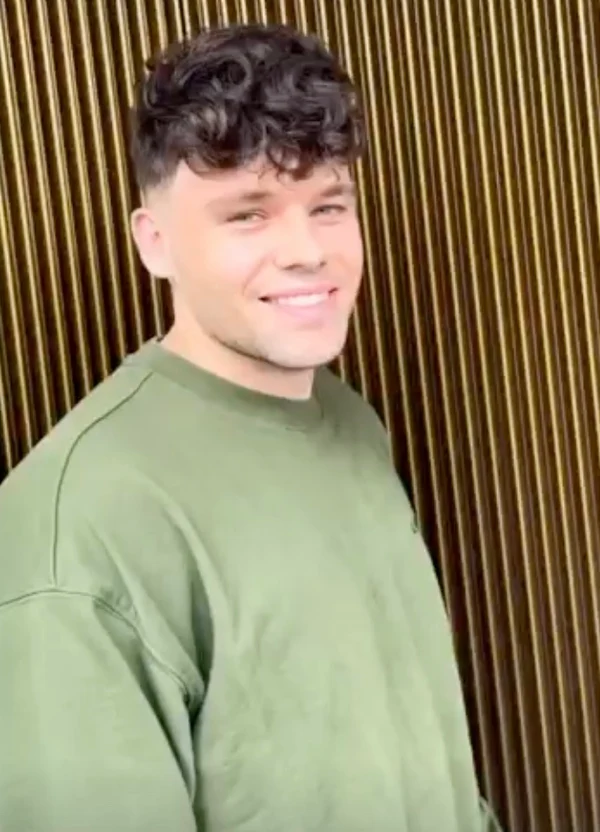
Curly top with a low or mid fade
Keep the fade below the widest part of my head and preserve weight at the ridge.
More movement
Medium scissor cut with internal layers
Remove bulk inside the shape without making the ends thin or fluffy.
More forehead coverage
Curly fringe with a soft taper
Judge the fringe at its dry resting length so it does not spring too high.
Longer curls
Layered rounded shape
Keep the perimeter full and place layers where the shape currently expands.
If facial balance is your first concern, use our face shape guide before choosing the outline. If you are still working out whether your hair is fine, thick, straight, wavy or curly, begin with our men’s hair type guide.
What actually decides whether a curly haircut works?
Curl pattern
Waves usually need enough length to bend. Loose curls need room to form a complete curve. Tighter curls and coils can create shape with less visible length, but their shrinkage makes dry length especially important. The label is useful, but your barber should read the pattern section by section because the front, crown and sides rarely curl in exactly the same way.
Density and strand thickness
Density means how many hairs are growing in an area. Strand thickness means how fine or coarse each hair is. Dense curls can become triangular when weight collects at the sides. Fine curls can lose definition when too much bulk is removed. This is why asking for heavy thinning without a clear plan often produces frizz rather than control.
Shrinkage and growth direction
The length you see when hair is wet is not the length you will wear when it is dry. The difference can also vary around one head. A fringe may spring much more than the back, while a crown may split or stand unless enough length is left to settle. A useful consultation checks both the natural dry position and the stretched length before cutting.
Your routine
A haircut that depends on careful sectioning, diffusing and two products is not low maintenance for someone who wants to shower and leave. Be direct about what you do on a normal weekday. A good shape should support that routine rather than demand a new personality from you.
Best men’s curly haircuts by length
Short curly crop with a low taper
This is the safest starting point when you want definition without a long routine. The top stays long enough for your natural bend or curl to appear, while the taper cleans the sideburns and neckline without stripping all the weight from the sides.
Best for: loose curls, tighter waves, active routines and men who want a professional outline that grows out softly.
Ask for: “Keep the top long enough to curl when dry. Clean the edges with a low taper and leave enough weight through the sides so the shape does not become narrow.”
Fade with a curly top
A fade creates stronger contrast and makes the texture on top the focus. It works best when the fade height is chosen for your head shape rather than copied from a photo. Taking it too high can separate the top from the sides and leave a rounded shelf at the ridge.
Best for: dense curls, men who like a crisp finish and anyone happy to refresh the sides more often.
Ask for: “I want clear contrast, but keep the fade low enough to blend into the curl. Do not take all the weight from the ridge.”
Medium scissor cut with internal layers
At medium length, the goal is movement without a triangle. Carefully placed internal layers release bulk where curls stack, while a stronger perimeter keeps the overall shape full. Random thinning is not the same thing and can leave short hairs expanding inside the cut.
Best for: wavy and curly hair that needs movement, men growing their hair out and anyone who prefers a softer outline.
Ask for: “Keep the outside shape full. Remove weight only where the curls stack, and check the balance again once the hair is dry.”
Curly fringe with a soft taper
A fringe uses the natural direction of curls rather than forcing everything back. It can soften a longer face, cover more of the forehead and make a mature hairline feel less exposed. The crucial detail is judging its dry resting point before taking off the final length.
Best for: curls that naturally move forward, higher foreheads and men who want visible texture without much height.
Ask for: “Let the fringe fall where it wants to sit and cut it for its dry length. Keep the taper soft so the front does not look disconnected.”
Longer layered curls
Longer curls need a clear silhouette. Layers can stop the base becoming too wide, but too many short layers create a halo of volume and make the ends look weak. The placement should follow where your own hair expands, not a standard diagram.
Best for: established curls with enough density to support length and men willing to condition and detangle consistently.
Ask for: “Preserve the length and keep the perimeter substantial. Add only the layers needed to stop the shape becoming heavy at the sides.”
Should you choose a taper or a fade with curly hair?
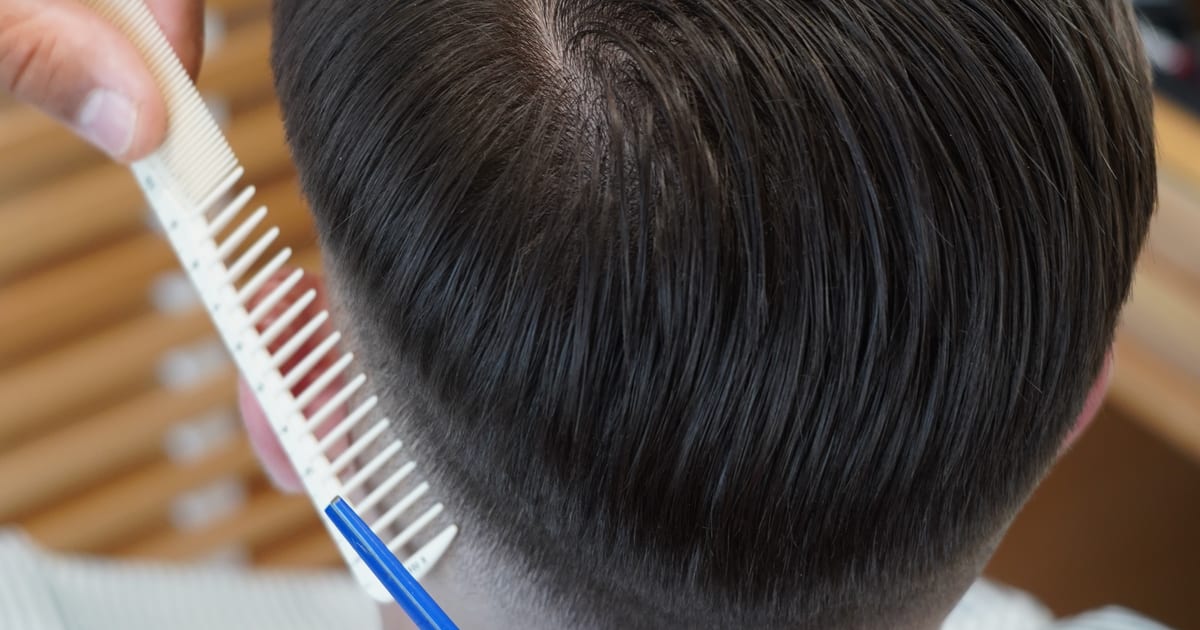
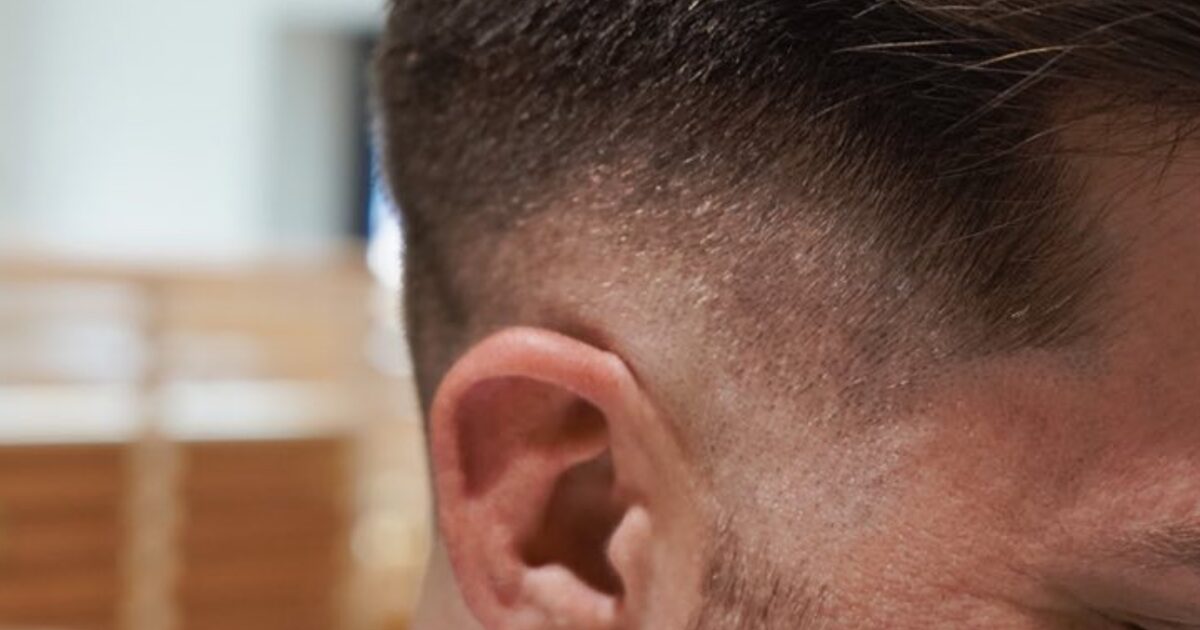
Choose a taper when you want the haircut to stay soft, keep more curl around the temples and grow out without an obvious line. Choose a fade when you want contrast and are comfortable with more frequent maintenance.
A low fade is usually easier to balance with curls than a very high one because it leaves room for the barber to connect the top. A high fade can still work, especially on dense hair, but it is a deliberate graphic look rather than the automatic answer for every curly haircut. Our complete fade and taper guide shows how the heights differ.
Should men’s curly hair be cut wet or dry?
There is no universal rule. Wet hair gives the barber control and makes it easier to create clean sections. Dry hair reveals the curl’s true resting position, spring and balance. Many strong curly cuts use both: assess the hair dry, establish the shape with the right level of tension, then finish and check it in its natural dry state.
The important point is not a fashionable label such as “dry cut”. It is whether the barber has accounted for how your own hair changes between wet and dry. A fringe, cowlick or section with stronger shrinkage should never be judged only while stretched.
What to do before a curly haircut appointment
Arrive with your curls close to how you normally wear them. Avoid a tight hat, bun or heavy product that hides the natural pattern.
Bring one or two references with a curl pattern and density similar to yours. Explain which details you like rather than asking for an exact copy.
Show the area that gives you trouble first. It may be a crown that opens, sides that become wide or a fringe that shrinks unevenly.
Be honest about your routine. Say whether you air dry, use a diffuser, apply product or prefer no styling at all.
Explain how you want the cut to look after four weeks, not only on appointment day.
A simple routine for defined curls
Curly and coily hair is more prone to dryness and breakage than straight hair, according to the American Academy of Dermatology’s curly hair guidance. That makes gentle handling and conditioning more important than adding more hold.
Apply product to damp hair so it spreads evenly and helps the curls group together.
Use a small amount first. Work it through sections, then scrunch upward without roughing up the surface.
Air dry or use a diffuser with low airflow. Strong moving air can separate the curl groups and create frizz.
Leave the hair alone while it sets. Once dry, gently break any firm cast with your hands.
Do not brush defined curls while dry. Detangle gently when the hair is wet and conditioned.
For a soft, touchable result, a curl cream is the practical starting point. For more definition and hold, use a curl gel on its own or in a light layer over cream. The amount depends on your density and length, so begin with less than you think and add only where needed.
Copying a different curl pattern. The silhouette may transfer, but the exact length and layering will not.
Taking the fringe too short while wet. Shrinkage can move it far above the point you approved.
Removing bulk everywhere. Weight should be removed with a purpose, not automatically from every section.
Choosing a fade that is too high for the shape. This can leave the top looking detached and make the head appear narrower.
Using heavy product at the roots. It flattens lift where you need it and creates buildup without improving definition.
What should you say to your barber?
“I want to keep my natural curl visible. This area gets wide, my fringe springs up more than the back, and I normally style with a small amount of cream and let it air dry. I like the outline in this photo, but I want the length adjusted to my curl pattern. Please check the finished balance when it is dry.”
That is more useful than naming one haircut. It tells the barber what your hair does, what you will do at home and which part of the reference actually matters.
Curly haircuts at The Good Barbers Zürich
At both Zürich shops, the consultation starts with how your hair behaves before we decide the fade height, layers or finished length. Our client feedback regularly mentions Simi’s work with curly hair at Enge and Rafael’s precision with curls and scissor work at Europaallee. You can choose either barber directly when booking.
What is the best haircut for men with curly hair? The best cut keeps enough length for your curl to form and controls weight where your hair expands. A short curly crop with a low taper is an easy starting point, while medium curls often benefit from carefully placed internal layers.
Should curly hair be cut wet or dry? Both can be useful. Wet cutting gives control and clean sections, while a dry assessment and final check show the true spring, shrinkage and balance. The barber should account for how your own curls change between both states.
Is a fade good for curly hair? Yes, when its height suits your head shape and leaves enough weight to connect with the top. A low or mid fade is often easier to balance than a very high fade, especially if you want the cut to grow out softly.
How much length do men’s curls need? Loose waves generally need more length before they bend, while tighter curls can show shape at a shorter visible length. The right amount also depends on shrinkage, density and the style you want, so judge it when dry rather than by a fixed number alone.
How often should men get a curly haircut? A short taper or fade usually looks freshest with visits every three to five weeks. A medium scissor shape may hold for six to ten weeks. The best interval depends on how quickly the outline loses balance, not only how fast the hair grows.
Is cream or gel better for men’s curly hair? Cream gives softness, moisture and flexible definition. Gel gives stronger grouping and longer hold. Fine waves often need only a small amount of light cream, while dense curls may benefit from gel or a light combination of both.
Your reference photo is the beginning of the consultation, not the final instruction. Bring it to the chair and we will adapt the shape to the curls you actually wear. Choose your service and book online.
Share:
About The Good Barbers
An independent Zürich barbershop interpreting official industry data from a working salon’s perspective.
Community
Join the conversation
Share your thoughts or ask a question. Our barbers are listening.




Community
Join the conversation
Share your thoughts or ask a question. Our barbers are listening.