Growing your hair out is a length goal, not a fixed calendar. Start with your current length, choose a target and allow for your own growth rate, curl shrinkage and any length removed during trims.
The stages below are a practical guide. Their month and centimetre ranges are approximate: hair texture, starting cut and styling change when each stage feels awkward. Maintenance appointments are optional and should serve your length goal.
How fast does men's hair actually grow?
Scalp hair grows roughly 0.35 mm a day, and the growth phase of each follicle runs for years, which is why length is a question of patience rather than luck. Over a month that lands somewhere between 1 and 1.5 cm for most men. We plan around 1.25 cm, which is 15 cm in a year. The StatPearls review of hair physiology has the underlying numbers if you want them.
Going from a short clipper cut to hair you can tie back can take well over a year. Cosmetic shampoos and oils do not promise faster follicle growth. Gentle care may help reduce breakage; supplements are not a routine shortcut and medical hair-loss treatment is a separate question.
Work out your own timeline
Use the planner as an estimate. It uses your starting length, target and growth-rate assumption. Actual retained length is growth minus length cut off or lost to breakage. Allow extra time for trims and curl shrinkage; the displayed date is not a guarantee.
The suggested trim count is an optional maintenance scenario, not a requirement for growth. Choose appointments according to the outline you want to keep and the budget you have agreed.
The five stages of growing your hair out
Length is not a smooth ride. It arrives in stages, and each one has its own problem to solve.
Weeks 0 to 8: still a haircut
Your hair is between 0 and 3 cm and it still holds the shape it was cut into. This is the easy part and it lulls people. The mistake here is booking your usual cut out of habit, because a normal appointment quietly removes the two centimetres you just spent two months earning.
What to do: say out loud, at the start of the appointment, that you are growing it out. Then let us clean the neckline and around the ears and leave the top completely alone.
Months 2 to 4: the sides start winning
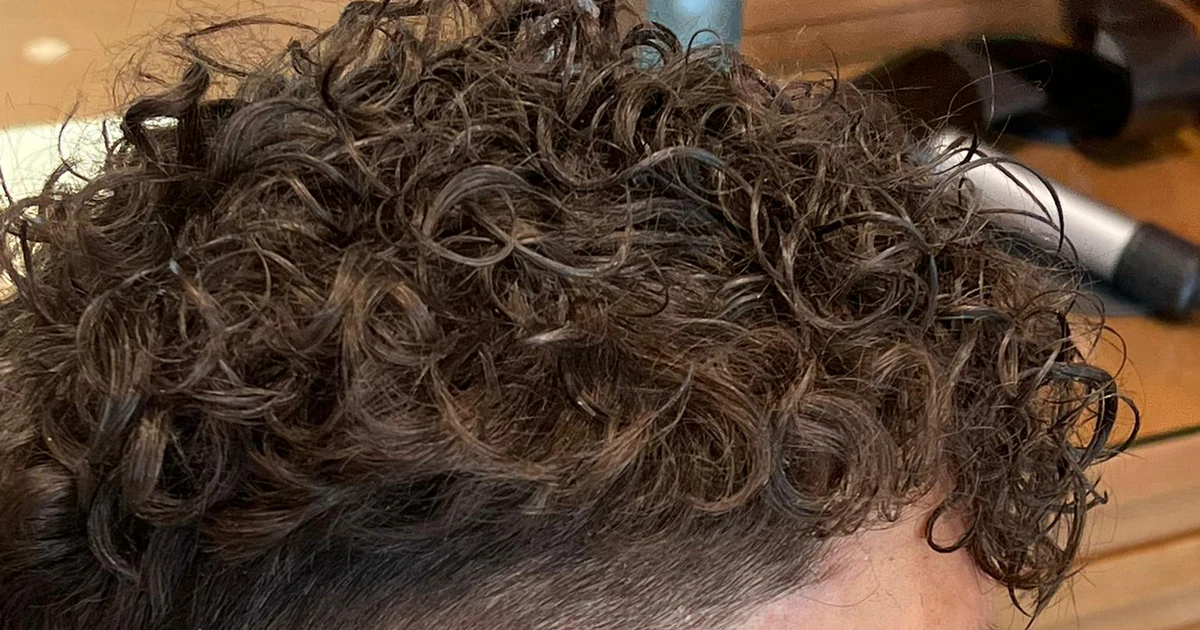
Around 3 to 6 cm your sides catch up with your top and the whole thing goes round. Hair above the ears has nowhere to go but out, so it stacks into a shelf and your head reads wider than it is. This is when men decide long hair does not suit them, when what does not suit them is a temporary shelf.
What to do: discuss whether reducing some bulk above the ears would help. Texturising cuts some strands, even if the longest perimeter stays. Agree which areas must retain their length and how much may be removed.
Months 4 to 7: the awkward stretch
At roughly 6 to 11 cm, some hair may flick, change parting or sit differently after sleep. Curly and straight hair can reach this awkward stage at different visible lengths. Adjust styling before deciding that the long-term goal does not suit you.
What to do: change what you are asking of it. Stop trying to hold a shape and start working with the direction it wants to fall. Damp hair, a grooming tonic, a comb, and pushed back or to one side rather than up. A cap on the bad days is not a defeat.
Months 7 to 12: it starts to fall
Somewhere past 11 cm, weight takes over. The hair stops standing away from your head and starts hanging from it, and almost overnight it looks deliberate again. Curtains, a middle part, a proper push back: this is where those become real options rather than aspirations.
What to do: consider a shaping cut if the outline needs it. Layers shorten selected strands, and trimming the perimeter removes some length. Agree a maximum amount before cutting and leave other areas alone if keeping length is the priority.
Month 12 and beyond: length you can style
At longer lengths, decide which outline you want to maintain. Trim ends when their condition or the shape calls for it, and condition the lengths as needed. There is no compulsory appointment interval.
Why you still book a barber while growing it out
This is the part that sounds like a shop trying to sell you appointments, so here is the honest version of it.
Different starting lengths, growth directions and curl patterns can make the outline look uneven. Split ends may appear, but they are not inevitable on every strand. Assess the shape and condition rather than assuming a year without cutting always damages the hair.
A grow-out appointment can tidy the neckline, adjust bulk and trim damaged ends where needed. Trimming ends reduces retained length; reducing bulk cuts selected strands. An eight-to-ten-week interval is one optional starting point. Agree the work and check the current service menu before booking.
If you want the general rules for how often to sit in the chair, we covered those in how often should you get a haircut. This post is the exception to them.
What to say in the chair
The single most useful sentence is the one most men never say. Try these instead of "just a trim", which we will hear as "take some off".
"I am growing it out, so nothing off the top." Say it first, before the cape goes on. It changes every decision that follows.
"Take the weight out of the sides, but keep the length." This is the request that solves the shelf. It is thinning and texturising, not shortening.
"Clean the neck and around the ears only." The two places that look untidy first and cost you nothing to fix.
"Here is where I am heading." A photo of the target style, not of your hair today. We cut differently for curtains than for a slick back, even at the same length.
"When should I come back?" Ask us to book the next one before you leave. Grow-outs die in the gaps between good intentions.
Getting through the middle without hating it
Choose product according to the finish and your hair. A lighter cream may help mid-length hair move; a stronger paste can still suit a defined style. Start with a small amount rather than ruling out whole product categories.
Apply according to the product instructions. A tonic or suitable cream on towel-dried hair can help set direction. Some finishing products work on dry hair. Neither wet nor dry application is correct for every product.
Wash when your scalp is oily or dirty or styling residue needs removal. Dry or curly lengths may suit longer intervals; exercise can change the schedule. Condition the lengths that need it. Our unmanageable-hair guide and styling-product comparison help refine the routine.
In winter, notice whether your lengths feel dry and adjust conditioning, heat and friction from hats or scarves. Weather does not create the same damage for everyone. See our winter routine for practical care ideas.
Will long hair even suit you?
Honest answer: length suits more men than think it does, but it does not suit every hair type equally, and the difference shows up in the middle stages rather than at the end.
Fine and thick describe the strand, not its growth speed. Curl shrinkage changes visible length, and curls do not need a fixed length before their natural pattern exists. Density, growth direction and your chosen finish determine where bulk or layers help. For thinning areas, compare compact and longer shapes rather than treating either as a rule.
Our hair type guide breaks this down properly, and if you are deciding between growing it and going the other direction, the fade guide covers the short end of the scale.
FAQ
How long does it take to grow your hair out? A planning average of 1.25 cm a month is about 15 cm of new growth in a year, before trims or breakage. Estimate months from the extra length needed, then allow for curl shrinkage and your measured growth. The style names in the planner are approximate length targets.
When is the awkward stage? Often when the old shape no longer holds but the hair has not reached the intended shape. The suggested month-four-to-seven window is an example, not a deadline. Starting length, texture and styling change it.
Should I get my hair cut while growing it out? Only when a shape adjustment or damaged ends justify it. Agree which areas may be cut and a maximum amount. Cutting ends removes length, so include that loss in your timeline. Eight to ten weeks is an optional maintenance interval.
Can I make my hair grow faster? Cosmetic products do not guarantee faster growth. Gentle care can help you retain the length that grows. Sudden shedding, thinning or persistent scalp symptoms deserve advice from a dermatologist rather than a styling product.
How do I stop the sides sticking out? Try a different drying direction or lighter styling first. If bulk is the issue, discuss selective texturising while retaining the agreed outline. This still cuts some hair; it is not a promise of zero length loss.
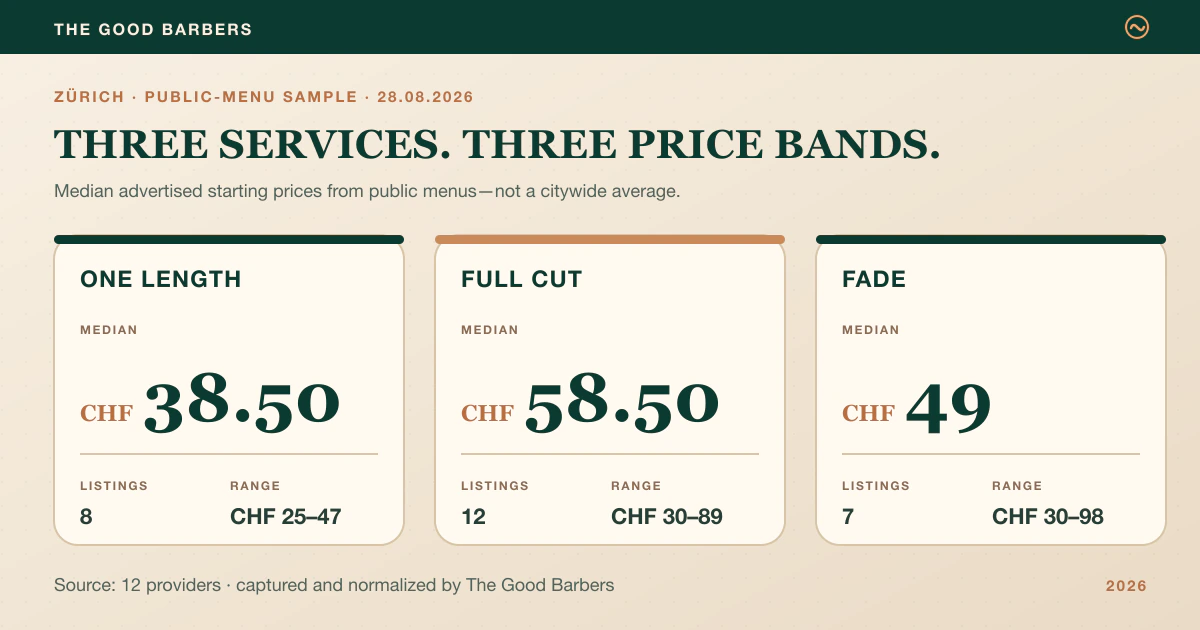
How much does growing it out cost in Zürich? Hair growth itself requires no salon appointments. If you choose maintenance, budget the number of visits you want at the current price of the appropriate service. The planner shows a scenario, not a required annual spend.
Growing it out and not sure whether the next appointment should take anything off? Come in, tell us the plan, and we will cut it to fit the plan rather than to fit the calendar. Book at Enge, Alfred-Escher-Strasse 66 or Europaallee, Lagerstrasse 102, or read more about both shops.
Share:
About The Good Barbers
An independent Zürich barbershop interpreting official industry data from a working salon’s perspective.
Community
Join the conversation
Share your thoughts or ask a question. Our barbers are listening.


Community
Join the conversation
Share your thoughts or ask a question. Our barbers are listening.